
A Mouthful of Rivets: Women at Work in World War II, was a collaboration by mother and daughter, Nancy Baker Wise and Christy Wise, published by Jossey-Bass Inc., Publishers (now John Wiley & Sons Inc.) in 1994.
“We wanted to work on a project together and were both interested in women’s place in the labor force during World War II,” Christy Wise said. “Mom was impressed with what women achieved during the war and with their quick acceptance into the workplace. I was amazed that women willingly gave up those achievements after the war ended and men returned from overseas.”
The mother and daughter team explored women’s work during the war including the womens’ reactions to leaving the workforce at war’s end.
“Few generalizations could be made about how women felt about leaving the workforce after the war – each woman’s outlook depended on where she worked, what she did, and why she went into the workforce,” Christy Wise said.
“Common to almost everyone was the confidence they gained while working and the fun they had. They hesitated to say they had fun, given that it was wartime, but most thoroughly enjoyed their work and believed that those years were life-changing.”
A Mouthful of Rivets: Women at Work in World War II not only features women working in manufacturing fields; it also highlights stories of women in white-collar jobs and other professions where men’s absence required women’s participation. Some women took the jobs of their own husbands, one became a postmaster and another was a door-to-door insurance salesperson.
Christy and Nancy Wise interviewed more than one hundred women from every part of the country to create this compilation of oral histories by women who traveled across the country to meet the nation’s wartime needs, faced discrimination and harassment, overcame inadequate training for jobs they took on, and triumphed over emotional and physical challenges.
“The women are the heart of this book. They’re fascinating, funny, insightful and courageous,” Christy Wise said. “We hope readers love their stories as much as we do.”

Praise for A Mouthful of Rivets
“It’s amazing that such an unpretentious book can do so much to the reader’s mind. World War II still exists in living memory for many Americans, myself included. But when a woman recalls how icemen and milkmen came right into the kitchen, left their wares and picked up money from the top of the icebox, you have to say, wow! That was a different America. One lady recalls working on the railroad still using kerosene lamps, and that memory swings back into your mind. Another remembers doing her laundry on a washboard, and the words themselves resonate with a lost reality: icebox, washboard, boardinghouse, snood.
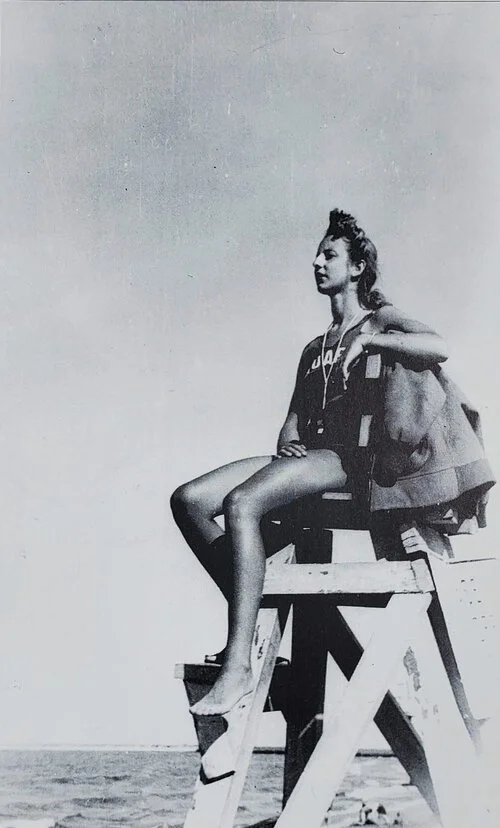
Clean language zings off these pages. Margaret Fraser Beezly worked in Whitehaven inspecting planes. She found a friend and lost her: “I wish I could find the other girl. Gertrude Rubinski.” (Gertrude if you’re out there write to Margaret, please.) Another girl worked as a lifeguard, and remarks: “People drown very quietly.” Another remembers: “I cried, and the tears froze on my face.” Some writers would kill for these honest sentences.
After the war, these women got laid off. Some of them felt cheated, but many were ready to marry, have kids, do something new. Now they travel, and work, and join the Peace Corps, and make homemade quilts, and help the poor. They are so wonderful, so incredibly swell. This is how unusual “A Mouthful of Rivets” is. It makes you actively proud to be an American woman.” — Carolyn See, The Washington Post
— — —
“Rosie the Riveter—that World War II icon that called women into the workplace for the sake of the war effort—is familiar enough, but what about the real women who followed her lead? Nancy Baker Wise was one of them, and in this book she has compiled, with her daughter's help, an oral history of the women who eagerly took on men's jobs while the men were away at war, then quietly turned them back over when the men came home. With wit and wisdom, more than 125 women tell their stories of being truck drivers, factory workers, machinists, oil drillers, fighter plane repairers, and, of course, riveters. They tell of being thrown into situations with no training and learning complicated jobs overnight; of balancing job and family; of fighting harassment and tears; of the thrill of earning money and handling new challenges; of the heartbreak of being shut out of the workplace at war's end. Their warm and engaging stories bring to life an odd, often neglected chapter of American history.” —Mary Ellen Sullivan, Booklist
— — —
“By 1943, two million American women had replaced WW II’s fighting men in blue- and white-collar jobs. Freelance writer Nancy Wise, who held a variety of office positions during that era, and her daughter, a freelance journalist, record the contributions of these women to the war effort, the “brief point in history when women rose to unexpected and surprising heights of achievement, then returned to more traditional roles, usually without protest.” First-person narratives recount the home front’s social upheaval and vividly portray the often difficult job condition—including sexual harassment—women faced. ‘Their occupations ranged from welder to personnel administrator. Although men displaced them at war’s end, the authors posit that these women paved the way for their offspring in the workplace.” — Publishers Weekly
— — —
“The mother-daughter Wise team has collaborated to bring together the stories of dozens of women who filled in for the men who left their jobs to serve in the Armed Forces. A Mouthful of Rivets carries the strong message that these women were happy to be working, proud of their accomplishments and independence, and aware that they were equal to the men they replaced. They delivered milk and worked in factories and gas stations to keep the country moving. The book concludes with a list of the women interviewed and an update on their status today. Readers will learn a great deal about history by reading these books. —Dorothy Lilly, Library Journal





Book Excerpts
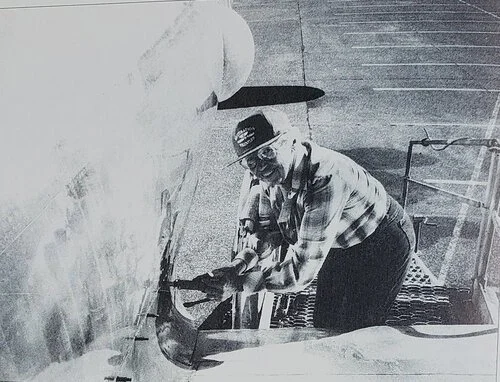
Caryl “Jeri” Johnson McIntire
From Chapter Seven: Women’s Ingenuity
Despite cautions by several friends not to become a welder, McIntire signed up for training and then a job working nights at the Boston Navy Yard – and loved it immediately. She liked the challenge, satisfaction and support she received from male co-workers. One man who took over Jeri’s shift in the morning observed that her work had a women’s touch.
“There was sort of a neatness about it, I guess. Maybe because a woman sewing would be satisfied with her stitch. That’s the way that I felt. It was all in the wrist.” - Caryl “Jeri” Johnson McIntire
Matilda Hoffman Becky Havers
From Chapter Two: Quick Studies
While she perched on a 28-foot ladder painting the outside of her house, Matilda Hoffman Becky Havers was recruited by her neighbor to work as a machinist in the New York Shipyard. At the shipyard, Havers overcame resentment of male co-workers, became a labor representative for women workers, and mastered all the machines in the yard.
“I worked at the shipyard almost four years and enjoyed every minute of it.” - Matilda Hoffman Becky Havers
Patricia Teeling Lapp
From Chapter Six: Coping with the Basics
Patricia Teeling Lapp worked as a weather observer and communicator for the Civil Aeronautics Administration at an emergency airfield at Lone Rock (pop. 500), WI, a bit west of Madison. On her regular midnight to 8 a.m. shift, Lapp encountered bitter weather, loneliness, a startling visit from the local sheriff, an abusive station manager – and rickety transportation.
“To get from town to the airfield, I bought an old Model A Ford from a farmer, and for “protection” during those long nights alone, I borrowed my landlord’s Irish setter. This car, which I’d bought for $50, had a flat tire almost every other day.” - Patricia Teeling Lapp

Nancy Baker Wise
About Nancy Baker Wise
Nancy Baker Wise (1921-1998) was an author, freelance writer and environmentalist. With her daughter, Christy Wise, she co-authored A Mouthful of Rivets: Women at Work in World War II, a chronicle of women who worked in non-traditional jobs during World War II.
Nancy’s own oral history appears in the book about her wartime work in the Agricultural Research Department of Swift & Co., in Chicago, IL.
“This had been a man’s job,” she said. “The department hired graduates of agricultural colleges who were ex-farmers or ranchers and knew the subjects they were writing about – like chicken diseases and crop cultivation.”
“When my co-worker, Beverly, and I turned up in this department, you can imagine the disdain with which we were received. What in the world could two urban young women possibly know about cattle diseases and the use of fertilizer?”
Like many women featured in A Mouthful of Rivets, Nancy and her co-worker established themselves as competent, resourceful employees. During her work at Swift & Co., Nancy began to lose her lifelong shyness.
Nancy also authored Marin’s Natural Assets: A Historic Look at Marin County. A dedicated environmentalist, Nancy Wise twice served as president of the Environmental Forum of Marin and on the Marin Conservation League Board of Directors. Her freelance articles appeared in many magazines, newspapers and newsletters including American Way, San FranciscoChronicle and Marin Independent Journal.

Nancy at a book signing for Mouthful or Rivets